Wednesday, August 8, 2012

Silent Film Festival

Silent Films (Level 2 VPAU 500.4)

Today in class (level 2) we watched this silent film.

Where is it filmed? Who are the characters? What happens : how does it start? what happens in the middle of the film? how does it end? Does the film have a message, meaning or lesson to teach us? Did you enjoy it or didn't you like it - why?

Exercise 1 : Ask yourself these questions as you watch the film again. Can you answer the questions?

Download the Silent Film Reading worksheet to see Dale's notes. 


Exercise 2 :  Here is a link to many other short, silent films on YouTube.

Use the worksheet to take notes on another silent film. Use Dale's notes as a model.

Bring your notes to class to share and show your teacher. We will write a review together.

Can't find a film? Try taking notes and writing about this short, silent film ...


Listening : Making A Film (Level 2 494.3)


Jeff and his brother made a film about their journey across India in a motor-rickshaw.

Listen to his story. Complete the vocab and comprehension quizzes.

Watch the film and read more about Jeff's journey across India in a motor rickshaw here!

Grammar : Passive or Active Voice?

We have been studying Passive and Active voice in our lessons recently. When do we mostly use passive? What is more important - the subject of the action or the object of the action?

Try this exercise.

Still confused? Watch this lesson ...


Level 1 (494.1) : Happy Birthday Mr. Duncan


Writing (495.2) : Leave Mr Duncan a happy birthday message on his You.Tube channel or Facebook page.

... Or write him a birthday card - Print a birthday card from here

Facebook - Join "Dale Pobega's Free ESL Club"

What are we talking about on Facebook this week? Take a look ...


Reading: Where were kites invented?

We read a story in class about the invention of paper. Read this story about where kites were invented. Note down examples of passive voice.




Sunday, July 29, 2012

Notes, Messages, Accidents & Dangers


Assessment Task 494.3 Interpret Simple Oral Texts

LEVEL 1 :  Listening


TAKING NOTES

Listen to the phone discussion. CLICK HERE.

1. Take notes from the conversation you hear ...

HOSPITAL:

FLOOR:

ROOM:

VISITING HOURS:


What happened?


Is he alright? Yes / No


If yes, how do you know?


What was he wearing?


LEVEL 1 : Reading

Read this note and answer the questions:


11.15 am

Fred

Grandma is in hospital. Don't worry, it's not serious. I'm going there now. She is in the Queen Victoria Hospital in Carlton. She is on the 4th floor in Room 409.

See you there.

Susan

P.S I've taken the car


Who wrote the note?
Who is the note for?
What is the message?
What time was it written?
What does he remember at the last moment?

LEVEL 1 : Speaking

A FRIEND OF YOURS HAS HAD AN ACCIDENT.

WITH A FRIEND WRITE A DIALOGUE.
 RECORD IT HERE AT VOXOPOP.COM

Use the listening text script of the conversation above as to help you ...

CLICK HERE TO READ AND PRINT SCRIPT OF THE CONVERSATION


LEVEL 2 (Information Texts): Dangerous Sports : Taking risks
The Olympics are on in London. Do you think this is a good sport for the next Olympics?


Watch the video above to get an idea about the "exciting" new sport of Free Running
(also known by its French name, Le Parkour)


Boxing / Skydiving / Karate / Footy / Diving / Free Running (Le Parkour)...

We talked about these sports in class.

1. Which sport is the most dangerous? Why?
2. Which sport is the least dangerous? Why?
3. Is Boxing more or less dangerous than Free Running? Why?


Now ask your friend what she thinks? Use REPORTED SPEECH and tell me your answers:

eg. Teresa said Boxing was the most dangerous sport because people get brain damage.

Grammar Exercise : Reported Speech (Click here and complete)

LISTENING / READING / WRITING - LEVEL 2

DANGEROUS ANIMALS

Which animals are dangerous in your country? In Australia we have sharks and crocodiles, snakes and spiders --- but are they really dangerous?

CLICK HERE to hear from Jingwei and Joseph from Singapore.

Which animals do they think are dangerous? Note: Click VIDEO QUIZ on the right hand side ofthe page to complete the listening exercise when you have finished listening to Jingwei and Joseph.


READING ... Are Sharks Really Dangerous? 


(Download the worksheet and questions here)

The Tasmanian Tiger (Thylacine)

Here is video of the last Thylacine, an animal, which was hunted into extinction Fold / Write / Check Dictation

Download the dictation about Thylacine (ask your teacher or a friend to read it out, then check your answers)


 HOW COFFEE IS PRODUCED (Level 2)


1. Watch the video

2. Take simple notes

3. Work with a friend - Can you write the procedure using Passive Voice?


Tuesday, June 19, 2012

Learning Journeys

This week we review our Learning Journeys in English.

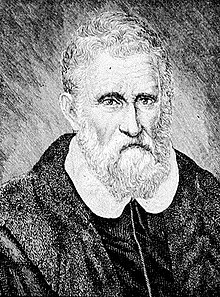
Marco Polo was a famous explorer. He went places no European had gone before. Going to new place or learning new things can be like Marco's journey. Everything is new, exciting, scary.

What dangers do you think Marco imagined? What new things did he see and learn about?

Here is the "fold and do" dictation about Marco Polo.

Here is the story (with questions) about Marco Polo.

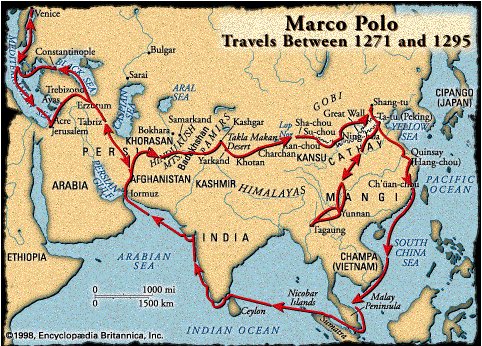
Here is a map of Marco's journey. 


Look at a modern atlas and list the countries Marco travelled through


Other Students' Learning Journeys

Read about the learning journeys of other students studying at PRACE, a community learning centre in Preston.

Leave a message of encouragement for one of the students you read about.

Take some notes about one of the students. Share with a friend. Which learning journey story did you like the most?

Individual Learning Plan and Portfolio Work (VBQU 117 / VPAU 500)

Use your portfolio for this term to complete the learning review worksheet for this term.

Which week did you like the most? Which week did you like the least? Did you learn something new? What do you need to study more?


Thursday, May 31, 2012

Myki Malfunction


Watch the video ...


Download, print and complete this "mini-test."

Download and check your answers


We have been studying Myki for a few weeks now. Most of us think Myki is okay but on our Myki excursion this week we had some problems. The Myki Machines on Sunshine Station were broken! The touch on / touch off pads were vandalized! How can we use Myki if the machines to do not work well? At Flinders Street Station we had to explain the problems to the staff - they were not very happy :-(

Still we had a good time ...


Thursday, May 17, 2012

Myki 2

Registering a Myki

What happens if your Myki is stolen or lost? Why would you "register" your Myki? What happens to your balance if your Myki card is not registered? Is it necessary to register?

Watch this video. What are the advantages? (Can you think of any disadvantages?)


Replacing a Myki Card (Complete a Form)


Replacement Form

Practice your FORM filling skills. Download the Myki Replacement Form.

Fill it in, save, print and bring to class!

Myki vs. Metcard (Comparing Prices)

Many people are unhappy about the changes. Some people say Myki is too difficult? What do you think? Is Myki more or less expensive than the old system, Metcard? Scroll through the document and answer the questions below.

myki_fare

1. How much do you save using Myki for a Daily Zone 1 + 2 Full fare?
2. How much does a 2 hour Zone 1 Concession fare cost?
3. What is the maximum you will pay per day if you use Myki on the weekend?
4. What is the difference in price between a Weekly Zone 1 Full Fare Myki Pass and a Weekly Metcard?


MELBOURNE'S FREE CITY CIRCLE TRAM


Do you know about the free city circle tram? It is a cheap excursion you can do with your family. Watch the video and download the map to see the route.


There is also a free bus you can take from the National Gallery of Victoria, around the city, up to Carlton and back via Docklands.


Download this brochure to find out more 


Grammar : Wish and Hope (Access 2/3)Watch this lesson about using Wish and Hope in English


Go to this page (English Grammar Secrets.com), read and complete the interactive exercises.


Sunday, May 6, 2012

Myki

Access 1 Assessment Tasks for this unit : VPAU 491.1 combining 491.3 (Listening) / VPAU 495.3 & 495.4 (Reading & Writing) Access 2 Assessment Tasks for this unit : VPAU 497.1 (Listening) / VPAU 500.1 & 500.2 (Reading & Writing) leading into 497.2 (Speaking)

What is Myki? Do you know how and where to buy a Myki card? What is "Myki money"? What does "touch on" and "touch off" mean? What does "top up your Myki" mean?


Watch the videos below and complete the exercises as you go ...


Download, print and complete this Comprehension worksheet

Touching on and Touching off


Myki Money or Myki Pass?


How to Top Up Your Myki


MATCHING GAME

Watch the video. Can you remember how to top up your Myki?


1. Download this PICTURE worksheet and print (PDF 420KB)

2. Download this LABELS worksheet
(PDF 69KB) print and cut the instruction labels into strips and mix up 

3. Can you match the PICTURES and LABELS?


4. Work with a friend. Tell each other how to top up a Myki card

5. Use sequence words like First of all, Then, After that, Finally ...


(6. Record your conversation on our site at ipadio.com) 


DUKE ST ESL STUDENTS : HOW TO TOP UP YOUR MYKI CARD

Click here to download an mp3. Listen to Level 2 students explaining how you top up a Myki card at the railway station


Find out about ... Types of Myki cards

Find more information about myki at the Myki Website

Download this brochure to read about myki  ...
Melbourne's Guide to Myki (PDF, 292KB, 16 pages)


MYKI SIMULATOR

Use the Myki simulator to buy a myki card / top up with myki money / and get a receipt (click here)

You can also learn more about Myki reader, Myki Gate and Myki Check machines


MAPS

Click the small map to open a bigger map of Melbourne's metropolitan train network. Print then ...

Download this worksheet and answer the questions.


Click the small map and open a larger map of Melbourne's Night Rider Network.

Download this worksheet and answer the questions


Tuesday, May 1, 2012

Hair Cuts


  DISCUSSION : In class this week we talked about hair, haircuts and hair styles.

Do you like your hair? Where do you get your hair cut? Would you like a new hairstyle? Would you like highlights or a new colour? 


VOCABULARY: long, short, medium length, bald, blond, brunette, red head, curly, straight, permed, dye, tint, highlights,shaved, trim, layered, tapered, fringe, side-burns around the sides / on the top / up the back
 / combed / blow dried / shampooed/

Can you add some more words? Here is a vocabulary list to download (word doc)

READING / LISTENING 1: 

Listen and/or read the story about Susan.

Exercise 1 : Download and complete this comprehension exercise

Exercise 2 : Listen to the story and complete the dictation. (Fold / write / check)

 WRITING 


Watch the video below. How does this woman trim her hair. Can you write instructions?


GRAMMAR GAMES Having / Getting something done ... (Level 2 /3)

Grammar Notes

Exercise One (Put in Order)

Exercise Two (Mix and Match)

Exercise Three (Complete the sentences)

Other interactive exercises like these are at http://www.englishgrammarsecrets.com/index.html

SPEAKING : Asking the hairdresser or barber for a haircut

Here are some Level 2 Role-plays about going to the hairdresser


Use the video to help you write your dialogue about going to the hairdresser or barber with a friend ***